

Dehydrated Hair vs. Dry Hair: What's the Difference?| Cache' Salon Hanford

Updated: Aug 10
Dehydrated Hair vs. Dry Hair: What's the Difference?
You switched shampoos.
You've tried deep conditioners.
Maybe you've even bought products that promised to "repair" your hair.
Yet it still feels rough, dull, or frizzy.
If that sounds familiar, you might be treating the wrong problem.
One of the biggest misconceptions we see in the salon is people assuming dry hair and dehydrated hair are the same thing. While they can look similar, they have different causes—and they often need different solutions.
Understanding which one you're dealing with is the first step toward healthier hair.
Quick Answer: Is Dehydrated Hair the Same as Dry Hair?
No. Dehydrated hair and dry hair are not the same thing, even though they often look similar. Dehydrated hair lacks water (moisture), while dry hair lacks natural oils (lipids). Dehydration is often temporary and can be caused by weather, heat styling, hard water, or product buildup that prevents moisture from reaching the hair. Dry hair is often a characteristic of the hair itself or the result of chemical services, aging, or damage to the hair's protective outer layer. Some people have dehydrated hair, some have dry hair, and many have a combination of both. Identifying which condition is affecting your hair helps you choose products and routines that actually address the
problem instead of masking it.
Dry Hair vs. Dehydrated Hair
Dry Hair | Dehydrated Hair |
Lacks natural oils | Lacks water |
Often feels coarse or brittle | Often feels rough, dull, or lifeless |
Common in naturally curly or coarse hair | Can happen to any hair type |
Often long-term | Usually temporary |
Benefits from nourishing oils and lipid-rich products | Benefits from hydration and moisture retention |
May result from aging or chemical processing | Often caused by environment, heat, hard water, or buildup |
Why So Many People Confuse the Two
Here's the tricky part.
Both conditions can make your hair feel rough.
Both can increase frizz.
Both can reduce shine.
Both can make styling more difficult.
From the outside, they often look almost identical.
But what your hair is actually missing is completely different.
Imagine two houseplants.
One hasn't been watered in weeks.
The other has damaged roots and can't absorb nutrients.
Both look unhealthy—but they need different solutions.
Hair works much the same way.
What Is Dehydrated Hair?
Dehydrated hair simply means your hair isn't holding enough water.
Healthy hair contains moisture that helps it stay soft, flexible, and resilient. When that moisture balance is disrupted, hair can begin feeling:
dull
rough
frizzy
static-prone
difficult to style
Unlike dry hair, dehydration isn't necessarily about damage.
Sometimes your hair is healthy—it just can't maintain proper moisture.
Common causes include:
excessive heat styling
low humidity
frequent sun exposure
hard water
harsh shampoos
chlorine
product buildup
overwashing
The good news?
Dehydrated hair is often reversible once the underlying cause is identified.
If your hair feels especially rigid or straw-like after shampooing, why your hair feels crispy after washing explains why dehydration may be only one part of the problem.
If your hair feels perfectly soft while it's wet but becomes rough again as it dries, our guide to why hair feels soft when wet but dry after it dries explains why the problem may involve moisture retention rather than simply needing more conditioner.
What Is Dry Hair?
Dry hair is different.
Instead of lacking water, it lacks enough natural oils to protect and lubricate the hair shaft.
These oils normally coat the outside of the hair, helping smooth the cuticle and reduce moisture loss.
When those oils are missing, hair often feels:
coarse
brittle
stiff
wiry
extremely porous
Dry hair is common in:
naturally curly hair
textured hair
gray hair
chemically lightened hair
mature hair
Unlike dehydration, dry hair may require ongoing care because it reflects the hair's natural characteristics or structural changes.
Can Hair Be Both Dry and Dehydrated?
Absolutely.
In fact, this is what we see most often.
Someone may naturally have dry hair because of texture or previous color services.
Then they add:
daily blow drying
flat ironing
summer sun
hard water
clarifying shampoos
Now the hair has lost oils and moisture.
This is why buying a product labeled "for dry hair" doesn't always solve the problem.
Sometimes the hair first needs hydration.
Other times it needs nourishment.
Sometimes it needs both.
If your hair seems to change from one week to the next, our guide to Why Your Hair Suddenly Changed Texture explains some of the most common reasons hair doesn't always behave the way it used to.
Signs Your Hair May Be Dehydrated
You may be dealing with dehydration if your hair:
suddenly looks dull
feels rough after washing
becomes frizzy in dry weather
tangles more easily than usual
loses bounce or movement
feels better immediately after conditioning but quickly becomes rough again
Many people assume this means their hair is damaged.
Sometimes it's simply thirsty.
Signs Your Hair May Be Dry
Dry hair often shows different patterns.
It may:
feel coarse all the time
lack softness even after conditioning
appear porous
absorb products quickly
feel brittle on the ends
become increasingly difficult to smooth
Dry hair often improves with routines that replenish oils while also protecting the hair's cuticle.
Why Products Sometimes Don't Work
This is one of the biggest frustrations we hear.
"I've tried everything."
Usually, that's not actually true.
Most people have tried many products—but they've all treated the same problem.
If the diagnosis is wrong, even excellent products can disappoint.
Imagine using sunscreen because you're cold.
It's a good product.
It's simply solving the wrong problem.
Hair care works the same way.
If you've tried countless products without success, our Hair Reset System can help you narrow down what's actually affecting your hair before spending more money on products that don't match your needs.
Common Mistakes That Make Both Problems Worse
Some habits can make either condition worse without you realizing it.
These include:
washing too frequently
using water that's extremely hot
skipping heat protection
assuming every frizzy day means damage
overusing heavy oils
ignoring hard water
constantly switching products before giving them time to work
Sometimes the problem isn't the product.
It's the routine.
What To Do Next
At-Home Support
Start by paying attention to patterns.
Ask yourself:
Does my hair always feel rough, or only after certain routines?
Does humidity improve it or make it worse?
Does conditioner help temporarily?
Have I recently colored, lightened, or heat styled my hair more than usual?
Small observations often reveal more than buying another product.
If you're unsure whether buildup is contributing to the problem, our guide to How to Know if Your Hair Needs Clarifying, Moisture, or Repair can help you determine which direction makes the most sense.
Professional Guidance
If your hair has become increasingly difficult to manage despite changing products and routines, a professional consultation can help identify what's actually happening.
Many concerns that appear to be "dry hair" are actually combinations of:
dehydration
buildup
damage
porosity changes
environmental stress
Finding the correct cause often saves both time and money.
🌿 Free Hair Reset Guide
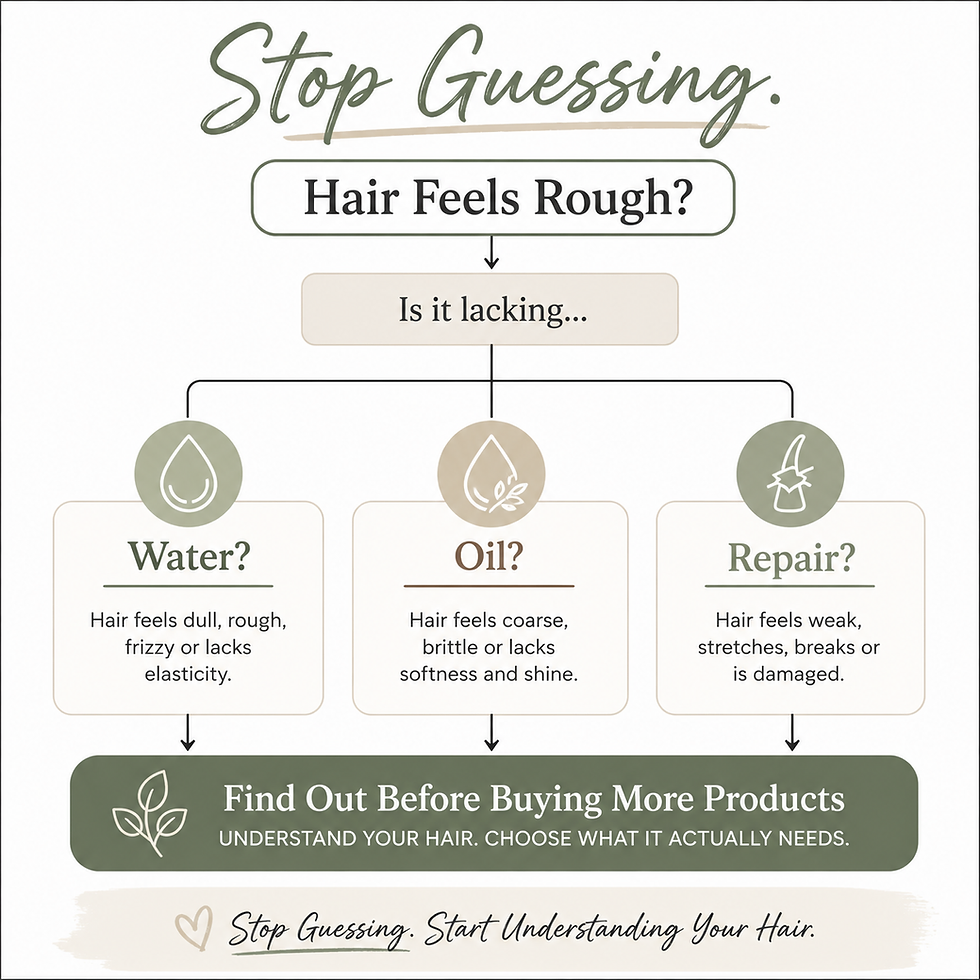
Stop Guessing. Start Understanding Your Hair.
Is Your Hair Dry, Dehydrated, Damaged…or Something Else?
Many hair problems look almost identical on the surface, which is why it's so easy to buy products that don't actually address what's causing the issue. Treating dehydration like dryness—or dryness like damage—can leave your hair feeling stuck in the same frustrating cycle.
The Free Hair Reset Guide walks you through the five biggest factors that influence hair health, helping you better understand what's affecting your hair so you can make more confident decisions about products, routines, and professional care.
Professional Insight
One of the most valuable parts of a professional consultation isn't recommending products—it's identifying the problem correctly.
At Cache' Salon, we often see guests who believe their hair is severely damaged when the primary issue is dehydration or buildup. Others assume they simply need more moisture when their hair is actually lacking protective lipids or recovering from previous chemical services.
A thorough consultation helps separate symptoms from causes, allowing us to recommend a routine that's appropriate for the individual rather than following trends or marketing claims.
If your hair feels less soft and more stiff or coarse, our guide to why your hair feels like straw explains why that texture doesn't always mean your hair is simply dry.
Professional Service Options
If you're struggling to determine whether your hair is dry, dehydrated, damaged, or affected by buildup, a professional consultation can provide clarity.
Depending on your hair's condition, recommendations may include:
professional clarifying treatments
customized conditioning services
bond-building treatments when appropriate
Keune home-care products selected for your specific needs
adjustments to your daily routine based on your hair type and lifestyle
The goal isn't simply healthier-looking hair—it's understanding why your hair behaves the way it does.
Why Hydration Matters More Than Most People Realize
Hair doesn't have a way to repair itself the way skin does, so protecting its moisture balance is an important part of keeping it soft, flexible, and easier to manage. Everyday habits like frequent heat styling, prolonged sun exposure, harsh cleansers, and environmental conditions can all contribute to moisture loss over time.
The American Academy of Dermatology also recommends limiting excessive heat styling, protecting hair from the sun, and using conditioners that match your hair's needs as part of maintaining healthier hair.
Closing
Instead of asking,
"What's the best product for dry hair?"
A better question is:
"What is my hair actually missing?"
Once you understand whether your hair needs water, oils, repair, clarification, or a combination of those things, choosing products becomes much easier—and your routine becomes far more effective.
Frequently Asked Questions
Can hair be dry and dehydrated at the same time?
Yes. Many people experience both conditions, especially after color services combined with frequent heat styling or environmental exposure.
Is dehydrated hair damaged?
Not necessarily. Dehydration is often temporary and may improve once moisture
balance is restored.
Does frizzy hair always mean it's dry?
No. Frizz can result from dehydration, humidity, damage, porosity, or even product buildup.
Are oils the best treatment for dehydrated hair?
Not always. Oils help reduce moisture loss, but dehydrated hair often first needs hydration before additional oils are beneficial.
How can I tell the difference at home?
Pay attention to how your hair responds to conditioning, humidity, and changes in your routine. Persistent concerns are often easier to identify during a professional consultation.
Does hard water make hair feel dry?
Yes. Mineral buildup from hard water can leave hair feeling rough and dull, even when the underlying issue isn't true dryness.
Can the wrong shampoo make hair feel dehydrated?
It can. Cleansing products that are too harsh for your hair type may remove more moisture than necessary.
Should I deep condition every week?
Not everyone needs the same schedule. The best routine depends on your hair type, services, environment, and current condition.
Want help choosing the right pro products for your hair? Explore our Keune Experience.
Written by Tammy Brown
Owner of Cache' Salon in Hanford, CA
18-year cosmetologist specializing in color, transformations, and education.


Comments