

Why Your Hair Feels Crispy After Washing—and What It Actually Needs | Cache' Salon Hanford

Updated: Sep 4
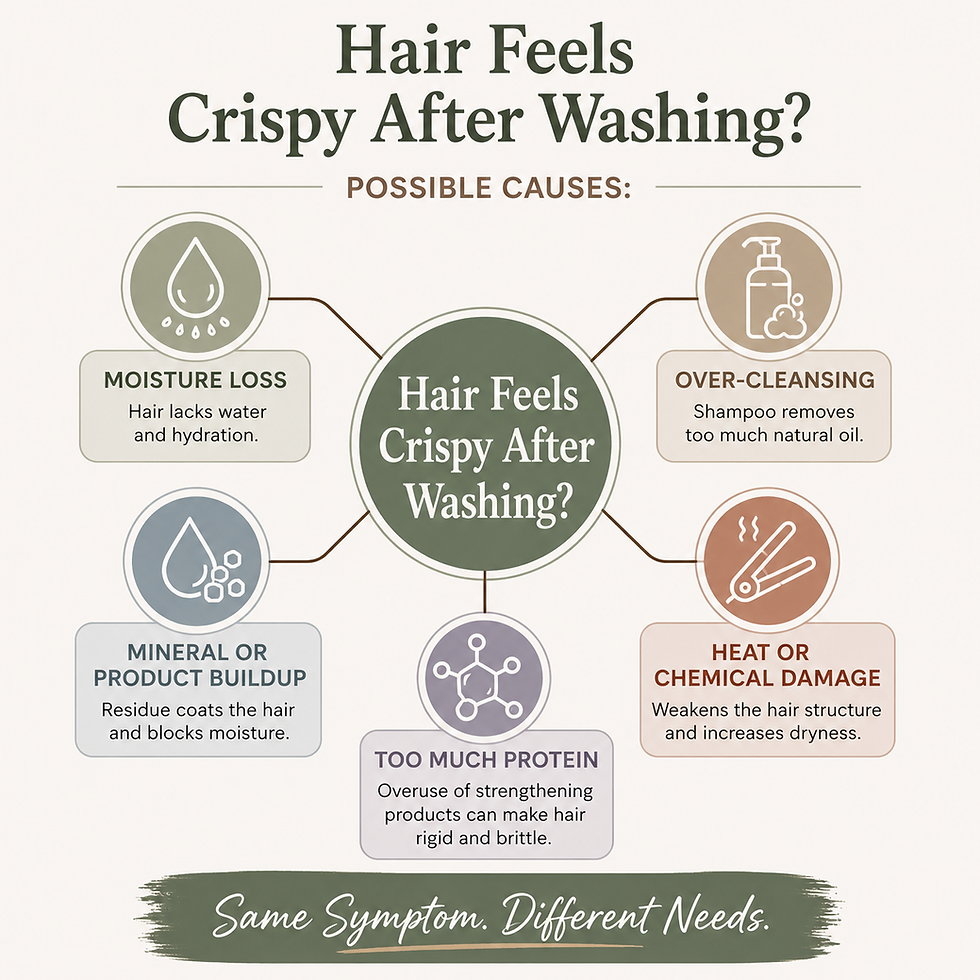
Why Your Hair Feels Crispy After Washing—and What It Actually Needs
You wash your hair.
You condition it.
You may even use a mask or leave-in product.
But once your hair begins to dry, it feels stiff, crunchy, rough, or almost straw-like.
That crispy feeling can make it seem like your hair is simply “very dry.”
But dryness is only one possibility.
The way your hair feels immediately after washing can reveal whether you are dealing with dehydration, buildup, damage, too much strengthening product, or a routine that is cleansing more aggressively than your hair can tolerate.
Quick Answer: Why Does My Hair Feel Crispy After Washing?
Hair can feel crispy after washing when the strands are missing enough water or natural lubrication to remain flexible, but that is not the only possible cause. A crunchy or straw-like texture may also come from mineral buildup, leftover styling products, repeated heat or chemical damage, too much protein or strengthening treatment, or a shampoo that removes more oil than your hair needs.
The most important clue is what happens next. If conditioner quickly restores softness, your routine may be too drying. If the hair stays stiff, coated, brittle, or rough no matter how much conditioner you use, buildup or structural damage may be contributing. Before adding more products, identify whether your hair needs moisture, clarification, repair, or a combination of those things.
What “Crispy Hair” Usually Feels Like
People use the word crispy to describe several different sensations.
Your hair may feel:
stiff as it begins drying
rough when you run your fingers down the strand
crunchy even though you did not use gel or hairspray
brittle near the ends
dry, but also strangely coated
tangled and difficult to separate
less flexible than it used to be
soft while wet but straw-like once dry
Those symptoms can look similar from the outside.
But they do not always have the same cause.
That is why adding another oil, mask, or repair product without narrowing down the problem can sometimes make the texture even more confusing.
If several post-wash symptoms seem to overlap, why your hair feels wrong after washing can help you evaluate the full pattern rather than focusing on one sensation.
Why Does My Hair Feel Crunchy After Washing?
If your hair feels crunchy after washing even though you didn't use gel, hairspray, or another styling product, the cause is usually similar to crispy-feeling hair.
The strands may be overly stripped, dehydrated, coated with mineral or product buildup, damaged from heat or chemical services, or reacting to too much strengthening care.
The important distinction is whether the crunchiness disappears once the hair is conditioned or softened. If it remains stiff, rough, or difficult to bend after conditioning, the problem is probably deeper than temporary dryness.
If you're not sure whether your hair is best described as crispy, crunchy, dry, brittle, coated, or simply different than it used to feel, our Hair Problems Resource Center organizes the most common symptoms so you can narrow down the likely cause before changing your routine.
The Most Common Reasons Hair Feels Crispy After Washing
What may be happening | What your hair may feel like | Helpful clue |
Moisture loss | Dry, rough, frizzy, thirsty | Conditioner helps, but only temporarily |
Over-cleansing | Squeaky, stiff, tangled | The feeling begins immediately after shampooing |
Hard-water or product buildup | Rough, dull, coated, difficult to soften | More conditioner makes it heavier but not softer |
Heat or chemical damage | Brittle, weak, rough, prone to snapping | Concentrated through the ends or lightened areas |
Too much protein or strengthening care | Rigid, hard, inflexible | Began after adding repair or protein products |
Product residue | Crunchy, sticky, stiff in sections | Improves after a thorough rinse or routine change |
1. Your Shampoo May Be Cleansing More Than Your Hair Needs
Hair does not need to feel squeaky to be clean.
That extremely clean feeling can sometimes mean that shampoo has removed much of the oil and conditioning residue that normally helps the strands feel smooth and flexible.
This is more likely when you:
shampoo more than once during every wash
use a strong clarifying shampoo too frequently
apply shampoo throughout the full length of the hair
wash often because the scalp becomes oily
use very hot water
have dry, curly, textured, lightened, or highly porous hair
The American Academy of Dermatology recommends concentrating shampoo on the scalp rather than scrubbing it through the entire length. It also recommends conditioning after washing and limiting excessive heat, all of which can help reduce unnecessary dryness and damage.
A useful clue
Pay attention to when the crispiness begins.
If your hair feels stiff, squeaky, or tangled the moment the shampoo is rinsed out, before it has even begun to dry, your cleanser or washing method may be too aggressive for your current hair condition.
2. Your Hair May Be Dehydrated Rather Than Naturally Dry
Dry hair and dehydrated hair are related, but they are not exactly the same.
Dry hair generally lacks enough natural oil or lubrication.
Dehydrated hair lacks enough water.
Hair can be naturally dry, temporarily dehydrated, or both at the same time.
Dehydrated hair may:
feel rougher after washing
lose softness as it dries
become frizzy or puffy
look dull despite using oil
feel better in humid weather
respond briefly to conditioner, then become rough again
Oil can make the surface feel smoother.
But oil alone does not replace water.
That is why someone can apply several oils or serums and still feel as though the hair underneath remains stiff and thirsty.
Our guide to dehydrated hair vs. dry hair explains how to tell whether your hair may be lacking water, natural oils, or both.
If the crispy or straw-like texture appears mainly after swimming, why your hair feels dry after swimming explains how chlorine, salt water, sun exposure, and porous hair can create a different kind of roughness.
3. Hard Water Can Leave Hair Rough Even After You Condition
Sometimes crispy hair is not only dry.
It is coated.
Hard water contains dissolved minerals that can remain on the hair over time. Combined with shampoo, conditioner, styling products, and natural oils, that mineral residue can interfere with how smoothly the strands feel.
Hair affected by buildup may feel:
rough but heavy
stiff near the mid-lengths and ends
dull or cloudy
difficult to saturate
tangled even after conditioning
worse despite using richer products
coated rather than clean
This is especially important in areas where mineral-heavy water is common.
The mistake is assuming that roughness always means the hair needs more conditioner.
If buildup is blocking the surface, adding more product may increase weight without restoring softness.
A useful clue
Compare how your hair feels when washed somewhere else.
If it feels noticeably softer after washing while traveling, at a salon, or in a home with treated water, water quality may be part of the problem.
Affiliate Disclosure: Some links on this page are affiliate links. If you make a purchase through one of these links, Caché Salon may earn a commission at no additional cost to you.
Not Sure If Hard Water Is Contributing to the Crispy Feeling?
Before adding another mask, repair treatment, or heavier conditioner, it can help to rule out the water itself.
If your home has elevated calcium and magnesium levels, mineral buildup may be contributing to hair that feels rough, coated, stiff, or difficult to soften even after conditioning.
We recommend Varify Water Hardness Test Strips as an inexpensive way to check your water at home before spending money on filtration or a water softener.
4. Your Hair May Be Damaged, Not Just Dry
Healthy hair should have some flexibility.
Damaged hair often loses that flexibility.
Repeated lightening, overlapping color, frequent flat ironing, high blow-dryer heat, sun exposure, and mechanical wear can gradually weaken the outer structure of the strand.
When that happens, hair may feel:
crispy through the ends
rough in specific lightened sections
brittle when dry
stretchy or gummy when wet
prone to snapping
difficult to smooth, even with conditioner
increasingly tangled
The American Academy of Dermatology notes that coloring, lightening, perming, sun exposure, and excessive heat can contribute to hair becoming dry, rough, weak, or brittle.
If your hair feels relatively soft after washing but turns crispy specifically when you use a dryer, why your hair feels dry after blow drying can help you determine whether temperature, technique, or existing damage is contributing.
If the crispy texture is concentrated in highlighted areas or older ends, our Hair Health and Repair Guide can help you understand what damaged hair can realistically recover from and what may need to be trimmed.
5. Too Much Protein Can Make Hair Feel Hard or Rigid
Protein and strengthening ingredients are useful when hair needs support.
But more strengthening is not always better.
Hair can begin feeling unusually hard, rigid, tangled, or inflexible when several protein-rich or bond-support products are layered together without enough conditioning support.
This may happen when a routine includes:
strengthening shampoo
protein conditioner
bond-building treatment
repair mask
strengthening leave-in
keratin-based styling products
The problem is not necessarily one individual product.
It may be the total routine.
A useful clue
Think about when the crispy feeling began.
If it appeared soon after starting several products labeled:
repair
strength
reconstruct
keratin
bond
anti-breakage
your hair may not need another strengthening treatment right now.
It may need a simpler routine and more balance.
6. Conditioner May Not Be Reaching the Areas That Need It
Conditioner can be excellent and still be used in a way that does not fully support the hair.
Common issues include:
applying too little to long or dense hair
placing conditioner only on the very ends
rinsing immediately
applying it before the hair is fully saturated
using a lightweight conditioner on highly porous or lightened hair
using a very rich conditioner on fine hair with buildup
skipping leave-in support when the hair needs extra slip
Hair texture, density, porosity, chemical history, and climate all affect how much conditioning support may be appropriate.
A conditioner should leave the hair more manageable.
But if it only makes the surface slippery while the strand still feels hard underneath, the larger issue may involve buildup or damage rather than a simple lack of conditioner.
7. Leftover Styling Product Can Become Crunchy Again
Not all post-wash crunchiness comes from the wash itself.
Some styling products are designed to form a flexible or firm cast as the hair dries.
This is common with:
curl gels
mousses
volumizing sprays
texture sprays
hairsprays
root-lifting products
some heat-protecting stylers
A product cast is not necessarily damage.
If the crunch disappears when you gently soften or scrunch the dry hair, it may simply be the styling product doing its job.
But if the hair remains rough after the cast is softened, or feels gritty and coated between washes, too much product may be accumulating.
Still Not Sure What Your Hair Needs?
Crispy hair can come from dryness, buildup, damage, over-cleansing, or too many strengthening products.
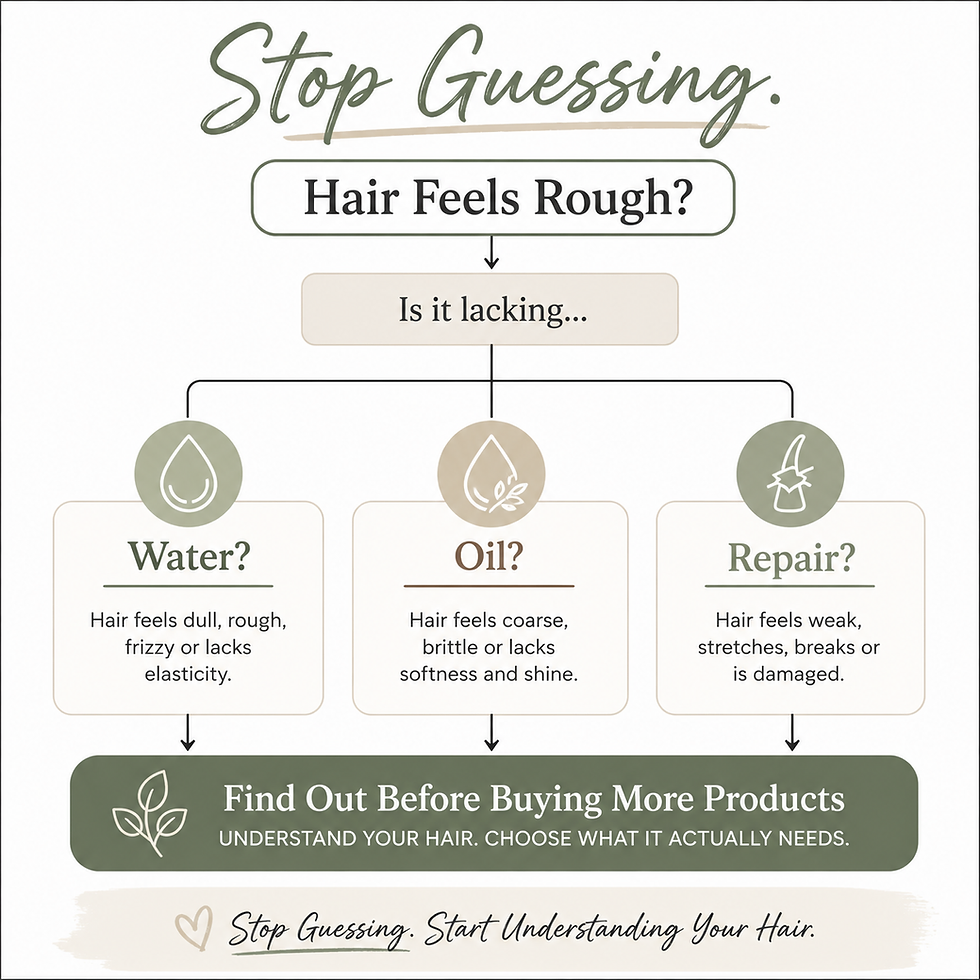
The Free Hair Reset Guide helps you look at the five biggest factors affecting your hair so you can stop guessing and make a more informed decision before changing your routine again.
How to Narrow Down the Real Cause
Before changing everything, ask yourself these questions.
Does the hair feel crispy before conditioner?
If yes, your shampoo or water may be leaving the hair overly stripped or rough.
Does conditioner make it soft, but only until it dries?
That can point toward dehydration, porosity, or damage that makes it difficult for the strand to retain softness.
Does more conditioner make the hair heavy but still rough?
Buildup may be interfering with the surface.
Is the texture worst through the highlighted or oldest areas?
Chemical, heat, or mechanical damage may be contributing.
Did the problem begin after adding repair products?
Look at the total amount of protein, strengthening, or bond-support care in the routine.
Does the hair feel soft while wet but crispy when dry?
That often means the wet slip from conditioner is temporarily disguising an issue that becomes noticeable once the water evaporates.
Does it happen only when styling products are used?
You may be feeling a product cast rather than dryness.
When the cause is unclear, how to know if your hair needs clarifying, moisture, or repair can help you choose the right category before buying another treatment.
What to Do Next
At-Home Support
1. Simplify one wash day
Use:
one gentle shampoo
one conditioner
one leave-in, if needed
no mask
no protein treatment
no extra oil until the hair is dry
This gives you a clearer baseline.
2. Shampoo the scalp, not every strand
Massage shampoo into the scalp and allow the lather to move through the lengths as you rinse.
Avoid aggressively scrubbing dry or lightened ends.
3. Use lukewarm water
Very hot water can make already vulnerable hair feel rougher.
4. Give conditioner time to work
Distribute it evenly through the mid-lengths and ends.
Use enough product to coat the hair without saturating the scalp unnecessarily.
5. Handle wet hair gently
Wet hair can be easier to stretch and damage.
Use a wide-tooth comb when appropriate for your texture, detangle from the ends upward, and avoid rough towel drying. Dermatologists also recommend reducing excessive brushing and high-heat styling to limit breakage and brittleness.
Affiliate Disclosure: Some links on this page are affiliate links. If you make a purchase through one of these links, Caché Salon may earn a commission at no additional cost to you.
A Gentler Towel Can Reduce Post-Wash Friction
If your hair already feels rough or crispy as it dries, rubbing it with a traditional bath towel can add more friction at exactly the wrong time.
We recommend the Hicober Microfiber Hair Towel 3-Pack as an inexpensive way to absorb excess water without aggressively rubbing or twisting wet hair.
→ Check the Hicober Microfiber Hair Towel 3-Pack on Amazon
6. Pause unnecessary strengthening products
If your routine contains several repair, bond, protein, or keratin products, temporarily simplify rather than adding another one.
7. Do not clarify automatically
Clarifying may help if buildup is present.
But if the hair is already over-cleansed or damaged, aggressive clarification can make it feel even rougher.
The goal is not to clarify because the hair feels bad.
The goal is to clarify when the evidence points toward buildup.
8. Track the pattern for two or three washes
Notice:
where the crispiness appears
when it begins
whether conditioner helps
whether styling products change it
whether it improves in different water
whether it is concentrated in damaged areas
One wash can be misleading.
A pattern is much more useful.
Professional Guidance
A professional consultation may make sense when:
the texture changed suddenly
the hair breaks easily
the ends remain stiff after conditioning
highlighted sections feel dramatically different
the hair feels both coated and dry
you are unsure whether to clarify or repair
several treatments have made the problem worse
the change is accompanied by scalp symptoms or unusual shedding
A stylist may evaluate:
product and mineral buildup
elasticity
porosity
breakage patterns
chemical history
heat exposure
the condition of the ends
moisture and strengthening balance
whether the hair needs treatment, a routine change, or a haircut
If a sudden change involves significant breakage, scalp irritation, or hair loss, a board-certified dermatologist can help evaluate whether something beyond the hair-care routine may be involved.
🌿 Free Hair Reset Guide
Stop Guessing. Start Understanding Your Hair.
Crispy Hair Does Not Always Need More Moisture
Hair that feels stiff or straw-like after washing can be caused by dryness, buildup, damage, over-cleansing, or an unbalanced routine. Because those problems can feel so similar, adding another mask or repair product may treat the wrong issue.
The Free Hair Reset Guide walks you through the five biggest factors affecting how your hair behaves so you can identify what may be changing, simplify your routine, and make more informed decisions before buying more products.
Professional Insight
When a client says her hair feels crispy, the texture alone does not tell us what treatment she needs.
We look at where the roughness appears.
We ask whether the hair is lightened.
We check whether it feels coated or squeaky.
We compare how it behaves wet versus dry.
We also ask what has recently changed in the client’s shampoo, water, styling routine, heat use, and repair products.
Two clients can use the exact same word—crispy—while needing completely different solutions.
One may need a gentler cleansing routine.
Another may need buildup removed.
Another may be feeling accumulated damage that no mask can permanently reverse.
The symptom starts the conversation.
It does not finish the diagnosis.
Professional Service Options
Depending on the cause, professional support may include:
a hair and scalp consultation
a buildup or hard-water evaluation
a carefully selected clarifying service
moisture-focused conditioning
bond-support care
a haircut to remove compromised ends
adjustments to heat styling
a simplified home-care routine
The best service is not always the strongest treatment.
It is the one that matches what the hair is actually showing.
Explore Our Hair Health Services
Stop Asking, “What Product Fixes Crispy Hair?”
A better question is:
Why has my hair lost its softness and flexibility?
That shift matters.
Because crispy hair can come from too little moisture, too much cleansing, buildup, damage, product residue, or an overly aggressive repair routine.
The goal is not to cover the symptom with more product.
It is to understand what changed—and respond to the actual cause.
Understanding your hair comes before choosing products.
Frequently Asked Questions
Why does my hair feel crispy as soon as I rinse out my shampoo?
Your shampoo may be too cleansing for your hair, you may be washing the lengths too aggressively, or mineral buildup may be making the strands feel rough. Pay attention to whether the feeling occurs before conditioner is applied.
Why is my hair soft when wet but crispy when dry?
Water and conditioner can temporarily make the surface feel smoother. As the hair dries, dehydration, porosity, buildup, or damage may become more noticeable.
Does crispy hair mean it needs protein?
Not automatically. Crispy or rigid hair can sometimes appear after too much strengthening care. Protein is most useful when it matches the hair’s actual condition.
Can hard water make hair feel like straw?
Yes. Mineral accumulation may leave the hair dull, rough, tangled, coated, or difficult to soften, especially when combined with product buildup.
Can too much conditioner make hair crispy?
Conditioner itself more commonly makes hair heavy or coated. However, buildup from rich products can leave the hair feeling rough underneath while also feeling weighed down.
Should I use a clarifying shampoo if my hair feels crispy?
Only when buildup is a likely cause. If the hair is already over-cleansed, very porous, or damaged, strong clarification may make the roughness worse.
Why do only my ends feel crispy?
The ends are the oldest part of the hair and usually have the greatest exposure to heat, color, sunlight, brushing, and friction. They may need more conditioning support or trimming.
Can heat damage cause crispy hair after washing?
Yes. Repeated high heat can reduce flexibility and contribute to roughness, brittleness, frizz, and breakage. The problem may become especially noticeable once the hair dries.
Can damaged hair become completely healthy again?
Some temporary improvements in softness and manageability are possible, but severely compromised sections cannot always be restored to their original condition. Treatment, gentler care, and trimming may all play a role.
When should I see a professional?
Seek guidance when the texture change is sudden, breakage is increasing, the hair remains unmanageable despite simplifying your routine, or you also notice scalp irritation, unusual shedding, or hair loss.
Want help choosing the right pro products for your hair? Explore our Keune Experience.
Written by Tammy Brown
Owner of Cache' Salon in Hanford, CA
18-year cosmetologist specializing in color, transformations, and education.


Comments