

Why Your Hair Feels Brittle (And What's Actually Causing It) | Cache' Salon Hanford

Updated: Sep 8

Why Your Hair Feels Brittle (And What's Actually Causing It)
You brush your hair.
Little pieces break off.
Your ends feel weak.
Your hair snaps more easily than it used to.
It may even feel dry, rough, or like straw.
Most people assume brittle hair simply needs more moisture.
Sometimes that's true.
But brittle hair is often a sign that the hair has lost strength, flexibility, or both.
Understanding why it's becoming brittle is the first step toward making it healthier.
Quick Answer: Why Does My Hair Feel Brittle?
Brittle hair is hair that has become less flexible and more likely to snap or break under normal brushing, styling, or daily wear. Heat styling, chemical services, dehydration, hard water buildup, excessive protein, environmental exposure, and accumulated damage can all contribute to brittleness. Although brittle hair often feels dry, dryness isn't always the underlying cause. The best way to improve brittle hair is to identify what weakened the hair fiber before choosing products or treatments.
Dry Hair vs. Brittle Hair
Dry Hair | Brittle Hair |
Feels rough | Breaks or snaps easily |
Often lacks moisture | Has lost flexibility and strength |
Usually responds to conditioner | May remain fragile despite conditioning |
Can feel soft after treatments | Continues breaking under stress |
May improve quickly | Often requires time and routine changes |
Dry hair and brittle hair frequently occur together.
But they are not the same thing.
A strand can feel dry without breaking.
A brittle strand has usually lost some of its ability to bend before it breaks.
What Brittle Hair Actually Means
Healthy hair isn't just soft.
It's flexible.
A healthy strand should bend slightly before it snaps.
When hair becomes brittle, that flexibility begins to disappear.
Instead of stretching slightly, the strand becomes more rigid.
Eventually, everyday activities like brushing, towel drying, or putting your hair into a ponytail can cause breakage.
Brittleness isn't one specific condition.
It's a symptom that tells us the hair fiber has been weakened somehow.
The Most Common Causes of Brittle Hair
Most brittle hair falls into one or more of these categories:
accumulated heat damage
chemical processing
dehydration
environmental stress
mineral buildup
routine imbalance
aging hair
mechanical wear from brushing or friction
The challenge is that several of these problems often exist at the same time.
That's why brittle hair can be frustrating to improve when you're only treating one possible cause.
If you're trying to narrow down what's really happening, our Hair Problems Resource Center organizes the most common hair concerns into simple diagnostic guides so you can identify the most likely cause before changing your routine.
🌿 Still Unsure Why Your Hair Keeps Breaking?
Hair that's becoming brittle doesn't always need another repair product.
Sometimes it needs less heat.
Sometimes it needs moisture.
Sometimes it needs buildup removed.
The Free Hair Reset Guide helps you understand the five biggest factors affecting your hair so you can stop guessing and build a routine based on what's actually happening.
1. Heat Damage Gradually Weakens the Hair Fiber
Heat styling is one of the most common reasons healthy hair gradually becomes brittle.
Every time high temperatures are applied, small changes occur to the protective outer layer of the hair.
Those changes add up.
Eventually the strand loses flexibility.
Instead of bending, it begins to snap.
Common sources include:
flat irons
curling irons
hot brushes
frequent blow drying
very high heat settings
The American Academy of Dermatology recommends minimizing excessive heat styling and using the lowest effective temperature to help reduce breakage and preserve healthier hair.
A useful clue:
If your ends are significantly more brittle than your roots, accumulated heat exposure may be part of the reason.
2. Chemical Services Can Increase Fragility
Coloring, lightening, relaxing, and perming all change the structure of the hair.
Professional services performed correctly can maintain healthy-looking hair.
However, repeated chemical processing over many months or years gradually increases wear on the hair fiber.
Hair that has been lightened multiple times may begin feeling:
weaker
rougher
more porous
easier to break
harder to detangle
This doesn't necessarily mean the most recent appointment caused the problem.
Hair often reflects the cumulative history of everything that's happened to it.
If your brittle hair is concentrated in highlighted or previously lightened sections, our Hair Health & Repair Guide explains how accumulated damage changes the structure of the hair and what improvements are realistically possible.
3. Dehydration Can Make Hair More Vulnerable to Breakage
Hair that lacks enough water becomes less flexible.
As flexibility decreases, breakage becomes more likely.
This is one reason dehydrated hair often feels brittle.
Common signs include:
rough texture
dullness
increased tangling
frizz
stiffness after drying
ends that seem to snap more easily
Adding oils may temporarily smooth the outside of the strand.
But oils don't replace water inside the hair fiber.
If you're unsure whether your hair is actually dry or dehydrated, our guide to dehydrated hair vs. dry hair explains how the two conditions differ and why treating the wrong one can delay improvement.
4. Hard Water and Buildup Can Make Hair Feel Weaker
Mineral deposits don't actually damage healthy hair the same way bleach or heat can.
But they can make the hair feel rougher, more tangled, and less manageable.
When buildup prevents conditioners from evenly coating the hair, strands may feel stiffer than they really are.
That roughness increases friction.
More friction often leads to more breakage during brushing.
If your hair feels both brittle and coated, the issue may involve buildup rather than damage alone.
When buildup is making brittle hair feel even worse...
If your hair feels rough, coated, or unusually stiff, a clarifying shampoo may help remove product residue and mineral buildup before you assume your hair needs another conditioning treatment.
Learn More and Shop Keune Perfect Clarity Shampoo
This gentle clarifying shampoo deeply cleanses the hair and scalp, removes product buildup, and prepares the hair to better receive conditioners and treatments. It's designed to clarify without becoming part of an overly aggressive routine.
5. Mechanical Wear Adds Up Over Time
Not all damage comes from chemicals or heat.
Hair also experiences everyday wear.
Examples include:
aggressive towel drying
tight ponytails
rough brushing
sleeping on abrasive pillowcases
repeated friction from backpacks or clothing
One event usually isn't enough to create brittle hair.
Years of small stresses often are.
6. Sometimes the Routine Is the Problem
Many people respond to brittle hair by adding more products.
Sometimes that's helpful.
Other times the routine itself has become too complicated.
Too many strengthening products.
Too much shampoo.
Too many styling products.
Too much heat.
Sometimes healthier hair starts with simplifying—not adding.
Questions That Help Narrow Down the Cause
Ask yourself:
Is the breakage mostly at the ends?
Did it begin after coloring?
Does your hair also feel rough or coated?
Is it soft while wet but brittle once dry?
Has your styling routine changed recently?
Do you use heat almost every day?
Have you recently added multiple strengthening products?
Those answers often reveal far more than simply describing your hair as "brittle."
If you're still unsure where to start, our guide to how to know if your hair needs clarifying, moisture, or repair walks you through the same diagnostic questions we use during professional consultations.
What to Do Next
If your hair feels brittle, resist the urge to immediately buy another repair treatment.
Brittle hair isn't one specific problem.
It's your hair's way of telling you something has changed.
The goal isn't to throw more products at it.
The goal is to understand why it's become more fragile in the first place.
At-Home Support
1. Reduce Heat Whenever Possible
If you're using a flat iron, curling iron, or hot brush every day, try giving your hair regular breaks.
When you do use heat:
choose the lowest effective temperature
use a quality heat protectant
avoid making multiple passes over the same section
Healthy hair can tolerate occasional heat much better than constant heat.
2. Be Gentle With Wet Hair
Wet hair is more vulnerable than dry hair.
Instead of aggressively rubbing it with a towel:
gently squeeze out excess water
use a microfiber towel or soft cotton T-shirt
detangle from the ends upward
avoid pulling through knots
Small changes in handling can significantly reduce breakage over time.
3. Don't Overwash
Frequent shampooing isn't automatically harmful.
But cleansing more often than your hair needs can leave already fragile strands feeling even drier.
Focus shampoo on the scalp and allow the lather to cleanse the lengths as it rinses through.
4. Condition Consistently
Conditioner helps reduce friction between hair strands.
Less friction means less breakage during brushing and styling.
Apply conditioner through the mid-lengths and ends, allowing it to remain on the hair for a few minutes before rinsing.
If your hair still feels rough after conditioning, the problem may involve buildup or structural damage rather than a lack of conditioner.
5. Simplify Before Adding More Products
When hair becomes brittle, many people respond by adding:
repair masks
protein treatments
oils
leave-ins
strengthening products
Sometimes that's appropriate.
Sometimes those extra layers make it harder to identify what's actually helping.
A simpler routine often provides much better clues.
6. Protect Your Hair While You Sleep
Nighttime friction can gradually contribute to breakage.
Simple changes like:
loosely securing long hair
using a silk or satin pillowcase
avoiding tight overnight hairstyles
may reduce unnecessary mechanical stress over time.
Affiliate Disclosure: Some links on this page are affiliate links. If you make a purchase through one of these links, Cache' Salon may earn a commission at no additional cost to you.
Reduce Overnight Friction on Fragile Hair
When hair is already brittle, small amounts of repeated friction can make breakage worse over time.
For an affordable pillowcase option: We recommend the Bedsure Satin Pillowcase.
Satin provides a smoother surface than traditional cotton and can help reduce unnecessary overnight rubbing.
→ Check the Bedsure Satin Pillowcase on Amazon
Prefer real silk? The Fishers Finery Mulberry Silk Pillowcase is our premium 100% silk option.
→ Check the Fishers Finery Mulberry Silk Pillowcase on Amazon
If you tie your hair back while sleeping, the hair tie matters too.
For an affordable option: We recommend Kitsch Satin Scrunchies as a gentler alternative to tighter traditional elastics.
→ Check the Kitsch Satin Scrunchies on Amazon
Prefer real silk? The Fishers Finery Silk Scrunchies are the premium option.
→ Check the Fishers Finery Silk Scrunchies on Amazon
7. Watch for Patterns
Instead of asking:
"How do I stop my hair from breaking?"
Ask:
Is the breakage only on my ends?
Does it happen after brushing?
Did it begin after coloring?
Is my hair also rough or coated?
Does humidity change how it feels?
Does conditioner improve it?
Has my routine changed recently?
Those patterns usually reveal the real cause much faster than changing products every week.
Professional Guidance
If your hair continues breaking despite improving your routine, a professional consultation can help determine what's contributing to the brittleness.
At Cache' Salon, we evaluate far more than whether hair simply feels dry.
We look at:
elasticity
porosity
chemical history
heat exposure
mineral buildup
breakage patterns
product history
haircut shape
the overall condition of the ends
Two people can describe their hair as "brittle."
One may need moisture.
One may need clarification.
Another may simply need to remove severely compromised ends that can no longer be restored.
That's why identifying the cause is always more valuable than guessing the treatment.
🌿 Free Hair Reset Guide
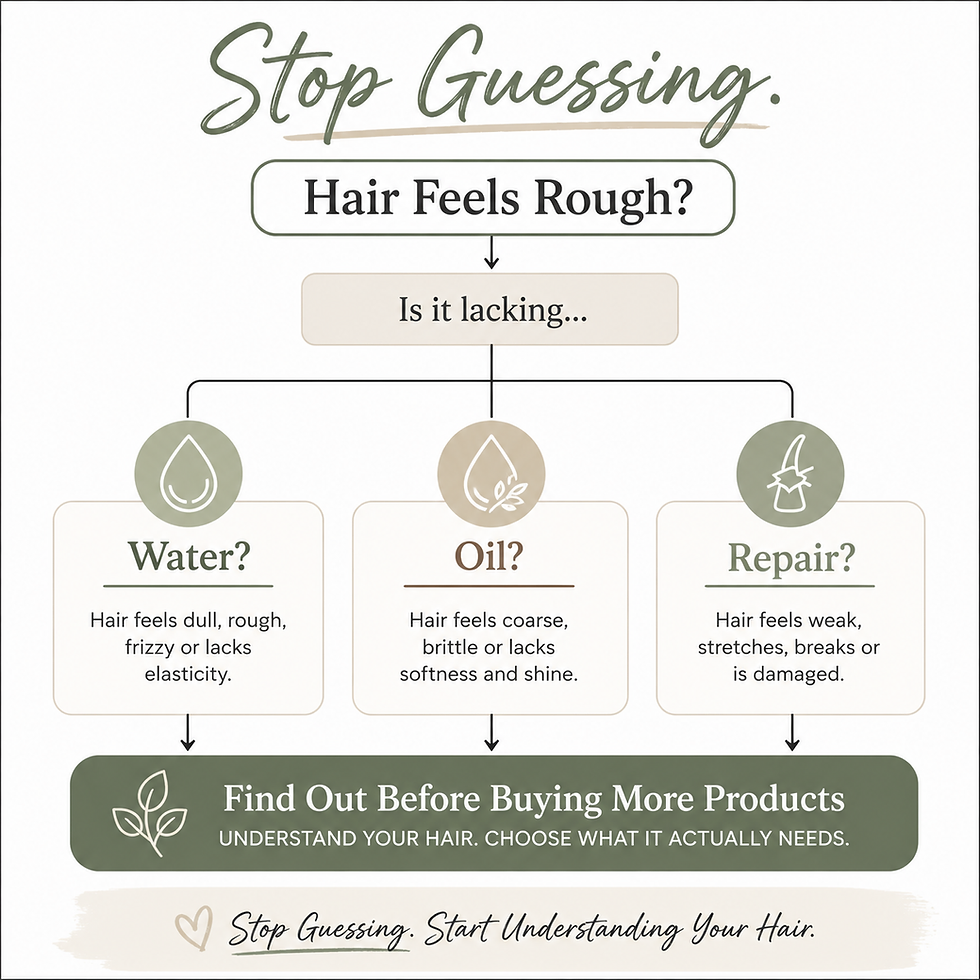
Stop Guessing. Start Understanding Your Hair.
Brittle Hair Is a Symptom—Not the Whole Story
Hair rarely becomes brittle overnight.
Changes in your routine, heat styling, chemical services, water quality, or even everyday wear can gradually weaken the hair fiber until it becomes more likely to snap.
The Free Hair Reset Guide helps you understand the five biggest factors that affect your hair so you can recognize what's changed, simplify your routine, and make more informed decisions before investing in another treatment.
Professional Insight
One of the biggest misconceptions about brittle hair is that every broken strand needs more repair products.
In reality, brittle hair is often the result of several small factors working together.
A client may have:
slightly dehydrated hair
mild hard water buildup
frequent heat styling
older highlighted ends
and a routine that's become more complicated than necessary
Individually, none of those issues may seem significant.
Together, they can dramatically change how the hair feels and behaves.
That's why we spend more time understanding the pattern than recommending products.
The goal isn't to make hair temporarily feel softer.
The goal is to understand what's preventing it from staying healthy.
Professional Service Options
Depending on what we discover during a consultation, recommendations may include:
Hair Health Consultation
Clarifying Treatment
Moisture-Focused Conditioning Treatment
Bond-Building Treatment
Customized Home Care Recommendations
Precision Haircut to Remove Compromised Ends
Color Consultation
Hair Health Maintenance Plan
Every recommendation begins with identifying the cause—not simply treating the symptom.
When brittle hair is caused by dryness or damage...
Once you've identified that your hair truly needs nourishment rather than clarification, choosing a product designed to strengthen damaged hair can make a noticeable difference.
Learn More and Shop Keune Vital Nutrition Shampoo and Conditioner
Keune's Vital Nutrition line is formulated for dry, damaged hair and is designed to nourish the hair, replenish essential lipids, and help reduce breakage while improving overall softness. According to Keune's testing, the routine leaves hair significantly more nourished and helps strengthen damaged strands.
Stop Asking, "How Do I Fix Brittle Hair?"
A better question is:
Why did my hair lose its strength in the first place?
That's where lasting improvement begins.
Because brittle hair isn't one condition.
It's the result of changes that gradually affect the strength and flexibility of the hair fiber.
Once you understand what's causing those changes, choosing the right routine becomes much simpler.
Healthy hair isn't just soft.
It's resilient.
And resilience starts with understanding your hair—not guessing.
Frequently Asked Questions
What causes brittle hair?
The most common causes include heat damage, chemical processing, dehydration, hard water buildup, environmental stress, mechanical wear, and routine imbalance.
Is brittle hair the same as dry hair?
No.
Dry hair lacks moisture or natural oils.
Brittle hair has lost flexibility and is more likely to snap or break.
The two often occur together but aren't identical.
Can brittle hair become healthy again?
Hair can often become softer, more manageable, and less prone to breakage with the right care.
However, severely damaged sections cannot always be fully restored and may eventually need trimming.
Why does my hair break when I brush it?
Brushing increases friction.
If the hair has already lost flexibility due to damage, dehydration, or buildup, it becomes much easier for strands to snap.
Can hard water make hair brittle?
Hard water doesn't directly weaken healthy hair like bleach or excessive heat can.
However, mineral buildup can increase roughness and friction, making breakage more likely during everyday styling.
Does protein make hair brittle?
Protein itself isn't harmful.
But using multiple strengthening products when the hair doesn't need them can sometimes make it feel rigid or less flexible.
Should I stop using heat if my hair feels brittle?
Reducing heat often helps minimize additional damage while the hair recovers.
Using lower temperatures and a heat protectant can also reduce future breakage.
When should I schedule a consultation?
If your hair continues breaking despite changing your routine, feels dramatically different than it used to, or you're unsure whether it needs moisture, clarification, repair, or a haircut, a professional consultation can help identify the underlying cause.
Want help choosing the right pro products for your hair? Explore our Keune Experience.
Written by Tammy Brown
Owner of Cache' Salon in Hanford, CA
18-year cosmetologist specializing in color, transformations, and education.


Comments