

Why Your Hair Texture Changes As You Age (And Why Your Old Routine Stops Working) | Cache' Salon Hanford

Updated: Jul 1

Why Your Hair Texture Changes As You Age (And Why Your Old Routine Stops Working)
Have you ever looked in the mirror and thought:
"My hair didn't used to do this."
Maybe it feels rougher.
Maybe it's flatter.
Maybe it gets frizzier, drier, thinner, or harder to style.
For many people, the products that worked perfectly for years suddenly stop delivering the same results.
The surprising part?
Your hair may not be the same hair it was 10, 20, or even 30 years ago.
Quick Answer
Hair texture often changes with age because the body produces less natural oil, hormone levels gradually shift, individual hair strands can become finer, and the scalp environment changes over time. These biological changes can cause hair to feel drier, rougher, flatter, frizzier, less predictable, or more difficult to style than it did in earlier years.
According to the National Institute on Aging guide to changes in hair and skin with age, aging can affect the body's oil production and the characteristics of hair itself, which is one reason many people notice their hair behaving differently as they get older.
Why Hair Changes With Age
Most people expect their skin to change.
They expect their eyesight to change.
They expect their metabolism to change.
Few people expect their hair to change.
But hair is heavily influenced by biology.
As the body changes, hair often changes with it.
Common age-related changes include:
Reduced oil production
Changes in hormone levels
Reduced hair density
Increased dryness
Texture shifts
More noticeable frizz
Loss of volume
Increased sensitivity to weather and environmental factors
The result is hair that may look healthy but behave completely differently.
If This Sounds Like You
You may be experiencing age-related texture changes if:
Your hair feels rougher than it used to
Your hair seems thinner or flatter
Products no longer work the same
Your hair gets frizzier more easily
Styling takes longer
Your blowouts don't last as long
Your hair tangles more easily
Your scalp feels drier than before
Many people assume they've chosen the wrong products.
Sometimes the bigger change is the hair itself.
Root Cause 1: Hormonal Changes
Hormones influence almost every aspect of hair behavior.
As hormone levels change throughout adulthood, hair may experience shifts in:
Texture
Thickness
Oil production
Growth patterns
Manageability
For many women, these changes become more noticeable during perimenopause and menopause.
For men, gradual hormonal changes can also influence hair density and texture.
If you'd like to learn more about the connection between hormones and hair behavior, read Why Your Hair Suddenly Feels Different (The Hidden Hormonal Changes Most People Don't Consider).
Root Cause 2: Less Natural Oil
One of the biggest reasons aging hair feels different is reduced oil production.
Natural oils help:
Lubricate the hair shaft
Improve softness
Increase shine
Reduce friction
Improve manageability
As oil production slows, hair often feels:
Drier
Rougher
Less flexible
More prone to static and frizz
This is one reason many people suddenly feel like their favorite shampoo has become "too harsh."
Root Cause 3: Changes In Hair Diameter
Hair strands themselves can change.
Some people notice:
Finer strands
Less density
Reduced fullness
Less volume
Hair that once held styles effortlessly may begin collapsing more quickly.
This often leads people to chase stronger products when the real issue is a change in the hair itself.
Root Cause 4: Increased Environmental Sensitivity
As hair ages, it often becomes more reactive to:
Weather changes
Humidity
Hard water
Heat styling
Product buildup
This is one reason many people experience inconsistent results.
One wash day may feel great.
The next feels completely different.
If this sounds familiar, read Why Your Hair Reacts Differently Every Wash (The Hidden Reason Your Results Never Stay Consistent).
Root Cause 5: Your Routine Never Evolved
This is one of the biggest issues we see.
People often keep using the exact same products for years.
The problem is that their hair isn't the same anymore.
A routine that worked at 30 may not be ideal at 45.
A routine that worked at 45 may not be ideal at 60.
Haircare should evolve with your hair.
If your products suddenly seem ineffective, read Why Your Hair Routine Stopped Working (Even Though Nothing Changed).
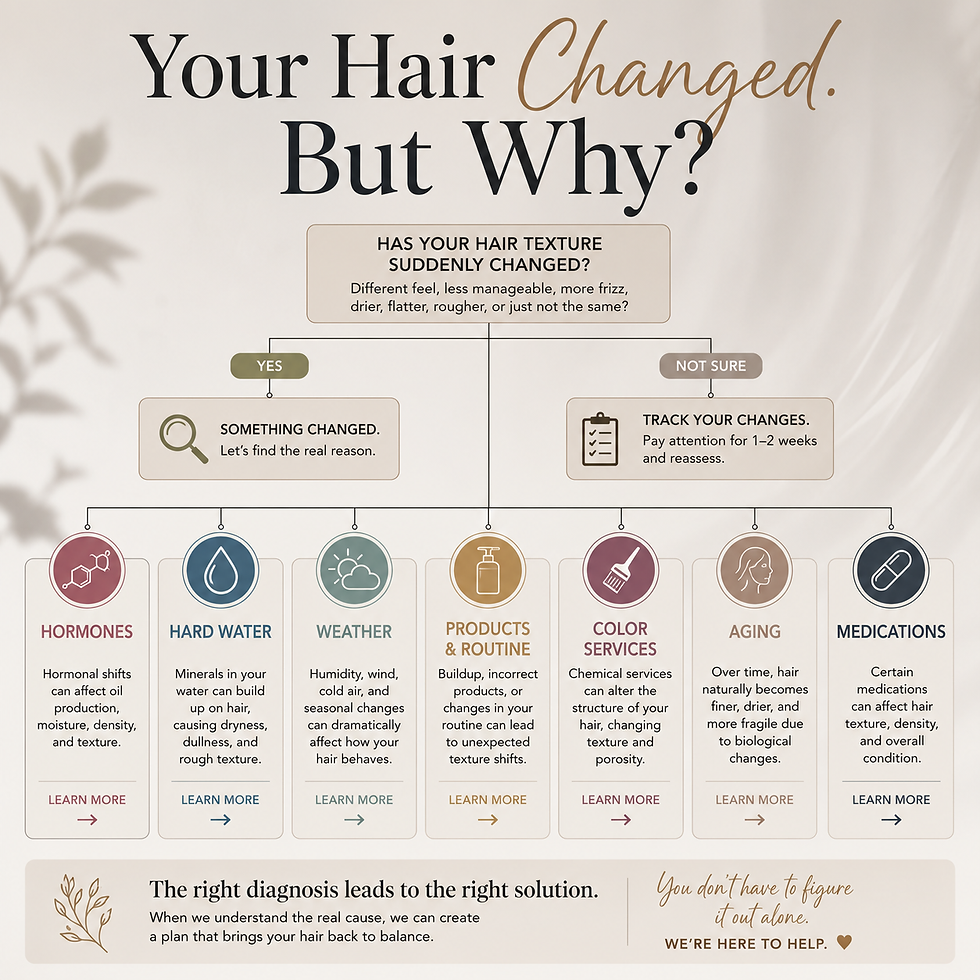
Why This Gets Confused With Other Hair Problems
Age-related changes can look surprisingly similar to:
Hard water issues
Hormonal changes
Weather-related texture shifts
Product buildup
Medication-related changes
That's why diagnosis matters.
Many people spend hundreds of dollars trying random products without identifying the actual cause.
For a broader diagnostic approach, read Why Your Hair Suddenly Changed Texture (The 6 Most Common Reasons Most People Miss).
What To Do Next
Start by asking:
What specifically changed?
When did it change?
Did the change happen gradually?
Has your scalp changed too?
Are your products still appropriate for your current hair needs?
The goal is not finding a miracle product.
The goal is understanding what changed.
Prevention And Solution
At-Home Support
Use moisture-focused products when dryness increases
Protect hair from excessive heat
Clarify when buildup develops
Adjust products as hair needs evolve
Prioritize scalp health
If your hair feels rough, dull, or unmanageable, start with The Right Hair Routine Based On Your Hair Type (Not Trends).
Professional Support
A professional consultation can help identify:
Age-related texture shifts
Product mismatches
Hard water issues
Hormonal influences
Scalp concerns
For personalized guidance, explore our Hair Services Consultation page.
Professional Insight
One of the most common things we hear from clients is:
"My hair used to be so easy."
They're usually right.
Hair changes over time.
The solution isn't forcing old routines to work.
The solution is adapting to what your hair needs today.
When clients understand what changed, they stop fighting their hair and start getting better results again.
If you're noticing changes beyond aging alone, explore our Hair Changes Resource Center to compare the most common reasons hair changes throughout life.
To better understand what causes hair to suddenly feel or behave differently, read Why Your Hair Suddenly Changed Texture.
Hair doesn't stop changing, and neither do the questions people ask. We publish new evidence-based guides to help you understand your hair and care for it with confidence.
FAQ
Does hair texture naturally change with age?
Yes. Changes in hormones, oil production, density, and hair diameter can all affect texture over time.
Why does my hair feel drier now than it did years ago?
Reduced oil production is one of the most common age-related changes affecting hair.
Can aging make hair frizzier?
Yes. Hair often becomes more vulnerable to humidity and environmental changes as it ages.
Why don't my old products work anymore?
Your hair's needs may have changed, even if the products themselves haven't.
Can aging make hair thinner?
Yes. Many people experience reduced density or finer strands as they age.
Is there a way to reverse age-related texture changes?
While you cannot stop aging, you can often improve manageability, moisture, shine, and overall hair health with the right routine.
When should I talk to a stylist?
If your hair has changed significantly and you aren't sure why, a professional evaluation can help identify the most likely causes and solutions.
Want help choosing the right pro products for your hair? Explore our Keune Experience.
Written by Tammy Brown
Owner of Cache' Salon in Hanford, CA
18-year cosmetologist specializing in color, transformations, and education.


Comments