

Why Your Hair Gets Greasy Faster Over Time (And What’s Actually Causing It) | Cache' Salon Hanford

Updated: Jul 28
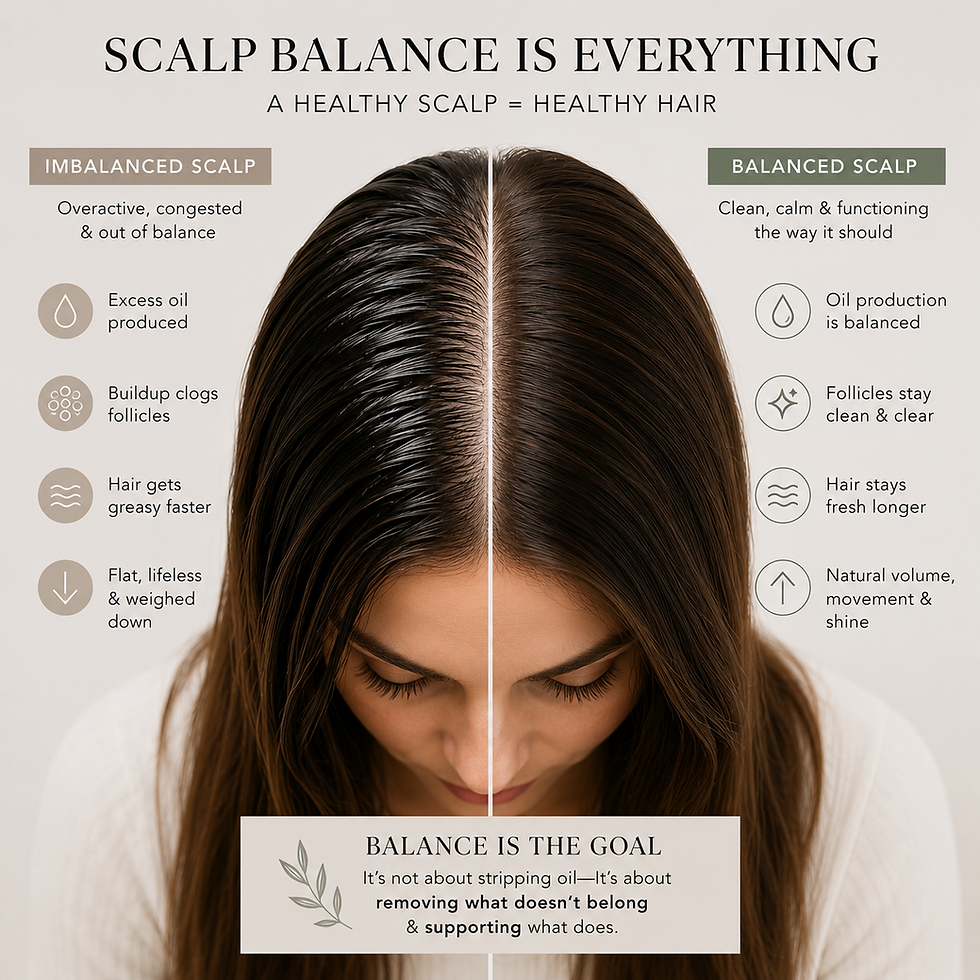
Why Your Hair Gets Greasy Faster Over Time (And What’s Actually Causing It)
If your hair seems to get greasy faster than it used to, you’re not imagining it.
Many people notice they suddenly can’t go as long between washes:
Roots feel oily by the next day
Hair falls flat faster
Freshly washed hair loses volume quickly
Dry shampoo stops working as well
And usually, the harder they try to “fix” it, the worse it gets.
Quick Answer
Hair often gets greasy faster over time because of buildup, overwashing, scalp imbalance, product layering, or changes in routine that disrupt how the scalp regulates oil. In many cases, the issue isn’t that your scalp suddenly produces too much oil—it’s that residue and imbalance are causing hair to feel greasy sooner and hold oil differently.
Residue buildup often contributes to why your hair feels clean but still coated.
Why This Happens So Gradually
Most people don’t notice this problem all at once.
It slowly turns into:
Washing more often
Using more dry shampoo
Adding more products to control oil
Feeling greasy sooner after every wash
Over time, the scalp becomes less balanced—not more.
That’s why many people feel trapped in a cycle:👉 wash more👉 get greasy faster👉 repeat
If This Sounds Like You
Your hair gets oily within 24–48 hours
Your roots flatten quickly
Dry shampoo works less than it used to
Your scalp feels greasy but your ends still feel dry
Your hair feels “off” shortly after washing
If this is happening, your scalp likely needs balance—not more product.
Scalp imbalance often contributes to why your hair reacts differently every wash.
🌿 Not Sure Why Your Hair Gets Greasy So Quickly?
Greasy roots aren't always caused by excess oil. Buildup, hard water, scalp imbalance, and changes in your routine can all make your hair feel oily sooner—even when you're washing it regularly.
The free Hair Diagnosis Guide walks you through the five biggest factors that affect healthy hair so you can identify what's really causing your hair to get greasy faster and build a routine that actually works.
What’s Actually Causing It
1. Product Buildup Is Trapping Oil
One of the biggest causes is buildup from:
Dry shampoo
Styling products
Conditioners
Oils and leave-ins
Over time, residue creates a coating on the scalp and hair.
That coating:
Holds onto oil
Makes roots feel greasy faster
Prevents proper cleansing
This is especially common if you regularly layer products without clarifying.
If you’re unsure whether buildup is involved, start with product buildup vs hard water.
2. Overwashing Can Disrupt Scalp Balance
Washing too aggressively or too frequently can:
Irritate the scalp
Disrupt oil balance
Trigger rebound oiliness
Ironically, trying to remove oil constantly can sometimes make the scalp feel oilier over time.
3. Hard Water Changes How Hair Behaves
Minerals in water can:
Prevent shampoo from rinsing properly
Leave residue behind
Make hair feel coated at the roots
This often overlaps with:
dull hair
greasy roots
heavy-feeling hair
4. Your Routine No Longer Matches Your Hair
Hair changes over time because of:
Environment
Hormones
Product habits
Seasonal changes
Heat styling and buildup
That means routines that worked before may stop working later.
This is why many people eventually need: how to tell what your hair actually needs
Why Dry Shampoo Eventually Stops Helping
Dry shampoo can be helpful short-term.
But relying on it too heavily:
adds more buildup
changes scalp behavior
makes cleansing less effective
That’s when people start noticing:
greasy roots faster
itchy scalp
dullness
flat hair
What to Do Next
If your roots feel coated or heavy:
Start with removal—not more oil control.
If buildup has been happening for a while: Start with the hair reset system
If your scalp feels greasy but your ends feel dry:
This is usually imbalance—not just oiliness.
If your hair feels greasy even after washing:
You may be dealing with incomplete cleansing or buildup.
Start with why does my hair feel greasy after washing
If your routine keeps failing:
The issue may not be the products—it may be the routine itself.
How to Rebalance Your Hair Long-Term
Once your scalp is reset:
Clarify periodically
Avoid over-layering products
Use lighter products when appropriate
Match your routine to your actual hair behavior
Avoid changing products constantly
Balance matters more than aggressively “fighting oil.”
Professional Insight: What Most People Get Wrong
The biggest misconception is: “Greasy hair means dirty hair.”
But greasy hair is often:
buildup-related
imbalance-related
routine-related
Most people don’t need harsher cleansing.
They need:
better scalp balance
less residue
more consistency
Hair Health Still Comes First
Healthy scalp function is critical for healthy hair long-term.
According to dermatologists, following healthy hair care habits recommended by dermatologists helps reduce irritation, buildup, and unnecessary scalp stress over time.
That’s why every routine should also support your hair health long term, not just temporarily reduce oil.
What This Looks Like at Cache'
When clients say: “My hair gets greasy so fast now”
We don’t immediately recommend stronger shampoo.
We look at:
buildup
washing frequency
scalp condition
water quality
routine overload
Most of the time, simplifying and resetting the scalp improves things dramatically.
If your hair keeps getting greasy faster over time, the fastest path forward is to book a personalized consultation so you can stop guessing and start correcting the root issue.
🌿 Free Hair Reset Guide
Stop Guessing. Start Understanding Your Hair.
Wondering why your hair seems to get greasy faster than it used to?
Hair changes over time, and your routine may need to change with it. Our free Hair Reset Guide explains the hidden factors that can influence your scalp and hair health.
FAQ
Why does my hair get greasy faster now than before?
Usually because of buildup, overwashing, scalp imbalance, or routine overload.
Can dry shampoo make hair oilier over time?
Yes. Overuse can contribute to buildup and scalp imbalance.
Should I wash greasy hair more often?
Not always. In some cases, overwashing worsens the cycle.
How do I know if buildup is causing greasy hair?
Hair may feel coated, heavy, flat, or greasy quickly after washing.
Can hard water make hair greasy?
Yes. Mineral residue can prevent proper cleansing and create buildup.
Want help choosing the right pro products for your hair? Explore our Keune Experience.
Written by Tammy Brown
Owner of Cache' Salon in Hanford, CA
18-year cosmetologist specializing in color, transformations, and education.


Comments